
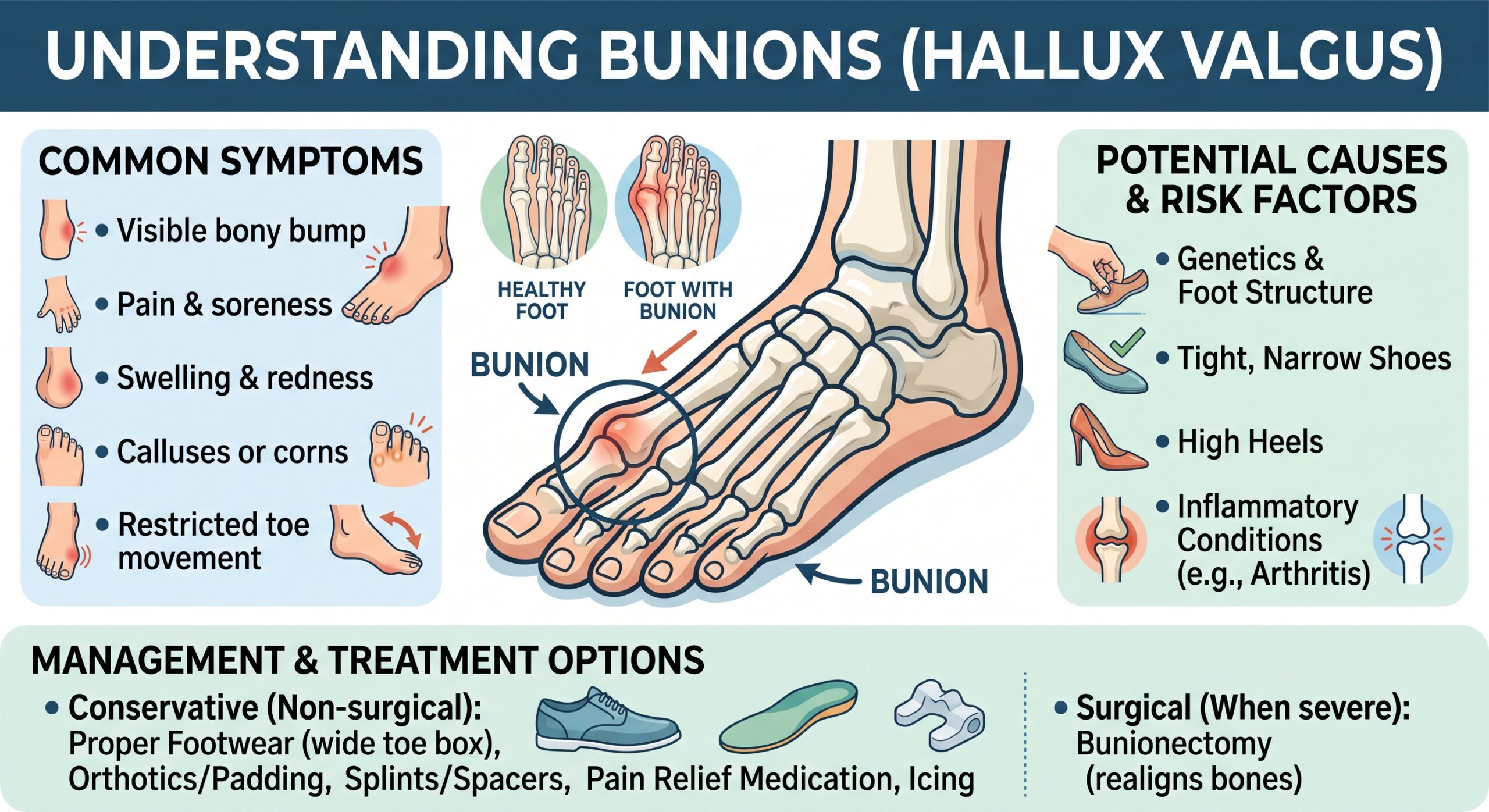
Bunion Care and Treatment
Bunions, also known as hallux valgus, develop when the big toe joint changes position, creating a visible bump on the side of the foot. They may cause pain, redness, swelling, difficulty walking and discomfort when wearing enclosed shoes. Our foot and ankle surgeons assess each patient’s symptoms, examine the foot and may use X-rays to determine the severity of the condition before recommending a personalised treatment plan.
- Detailed assessment of bunion symptoms
- Diagnosis supported by clinical examination and X-rays
- Advice on suitable footwear and activity changes
- Orthotic options for managing mild symptoms
- Pain relief recommendations where appropriate
- Personalised surgical treatment for severe bunions
- Clear guidance about bunion surgery and recovery
- Ongoing care from specialist foot and ankle surgeons
What are bunions?
Bunions (Hallux Valgus) look like a bump or swelling on the side of the foot near the big toe knuckle joint. While you might initially notice that the skin is red, bunions actually reflect a change in the structure of the big toe. They can eventually become quite painful.Scheduling an appointment is quick and convenient. You can call our clinic, visit our website, or use our secure online booking system. Simply select your preferred doctor, choose an available date and time, and confirm your appointment to receive prompt, personalized medical care without any hassle.
What are the symptoms of bunions?
In the early stages of formation, bunions may not have any symptoms. However, as they progress, bunions can cause:
- Pain, especially when wearing enclosed shoes
- Redness and swelling
- Difficulty walking
- Difficulty finding shoes to fit comfortably
What causes bunions?
The cause of bunions is unknown, however, bunions, like foot shape, can be hereditary and we often hear patients tell us of how terrible their grandmother’s feet were. They can also be caused by trauma, or arthritis. Bunions get worse over time and if left untreated they can lead to arthritis of the big toe joint.
How are bunions diagnosed?
Our foot and ankle surgeons, Prof Platt and Dr Phegan, can usually make a diagnosis of hallux valgus by getting a detailed history from you and examining your foot. An X-Ray is usually done to confirm the diagnosis, and the extent of the condition.
What is the treatment for bunions?
The good news is that bunions respond well to treatment and we can prepare a treatment plan for you.
In early cases with mild symptoms, changing your shoe wear and activity may be enough to ease symptoms. It may also be useful to consider orthotics. Simple over the counter analgesics can also be very helpful in alleviating symptoms in mild cases.
Surgery is performed when symptoms are severe or do not improve. Surgery is performed under general anaesthetic and is usually a day procedure.
Our foot and ankle surgeons will talk through the treatment options that are right for you. All surgery is tailored specifically to your bunion.
The symptoms usually resolve rapidly after surgery; however, all foot surgery tends to take a little longer than most people anticipate. We will take the time to talk with you about what to expect.
Recovery after bunion surgery
Recovery time varies depending on the severity of your bunions and the exact surgery performed. It is important to follow all your post-operative instructions carefully. Complications such as infection, nerve damage, or recurrence of the bunion are rare but possible, so it’s essential to report any unusual symptoms promptly to us.